
Some families plan film nights: a fixed evening, the lights down, everyone in their seat. Others watch spontaneously: the news while cooking, a match with friends, a series after the children are asleep. Both want a great picture and sound. They need very different rooms.
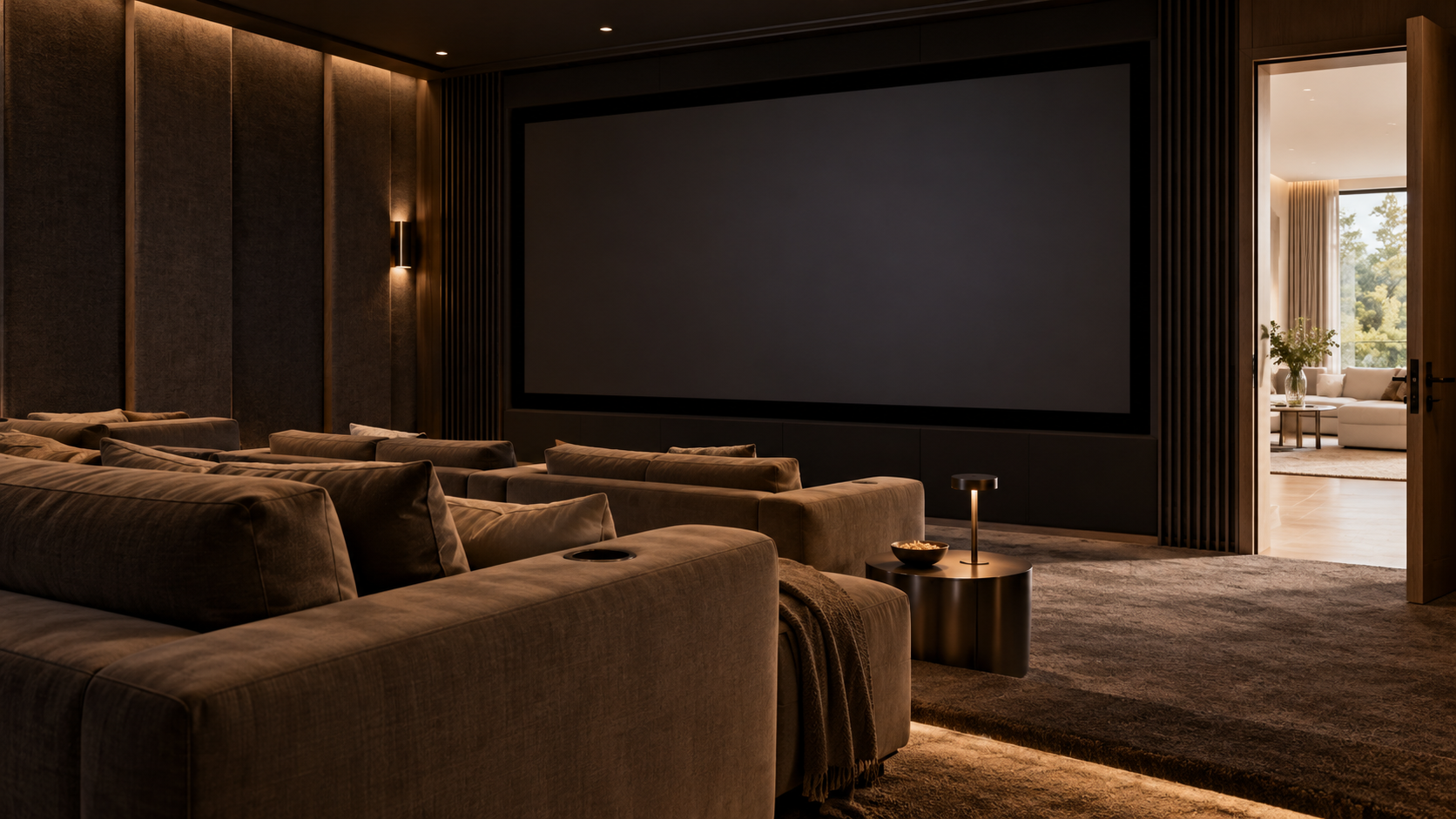
So the decision between a dedicated cinema and a cinema experience in the living room starts with a description of how the household actually watches.
Three questions that usually decide it
- Is viewing planned or spontaneous? A room that takes preparation to use is wonderful for planned evenings and easily forgotten for everyday viewing.
- Who watches, and with what? Children’s films, sports with guests, streaming series and occasional concerts place different demands on seating, sound level and control.
- What else happens in the space? A living room also hosts conversation, daylight, meals and furniture chosen for comfort and appearance. A dedicated room can be organised around the screen and the seats.
How the two options compare
| Dedicated cinema room | Cinema in the living room | |
|---|---|---|
| Picture | Light can be fully controlled | Must cope with daylight and room lighting |
| Sound | Room and speakers designed together; isolation from other rooms can be planned | Shared with daily life; level limited by the household and neighbours |
| Seating | Arranged for viewing | Arranged for living, then checked for viewing |
| Use | Excellent for planned sessions | Used more often, in shorter moments |
| Building work | Acoustics, ventilation, lighting and joinery usually involved | Mostly integration into the interior design |
Neither is a lesser choice. A well-designed living room that the family uses every day can deliver more enjoyment than a dedicated room that waits for a special occasion.
Illustrative scenario. Imagine a family with three teenagers who watch sports with friends on most weekends and rarely sit through a full film together. A large, well-integrated screen and good sound in the family room may serve them better than a separate cinema in the basement.
Compare complete scopes, not equipment prices
A cinema project is more than the screen, speakers and processor. Before comparing proposals, check whether each one covers:
- Room preparation and acoustic work.
- Control of picture, sound, lighting and, where relevant, shading.
- Cabling routes and equipment location.
- Ventilation and access for maintenance, especially if equipment is concealed.
- Setup and calibration once furniture and finishes are in place.
Identify the items that other trades will supply, such as joinery, lighting or air conditioning, so nothing falls between quotations.
Agree what “working well” means before installation
Choose a few acceptance situations that represent real use: watching ordinary television with daylight in the room, starting a film in the evening, and changing source as someone who uses the room only occasionally. For a dedicated room, add comfort during a long session and how much sound reaches the bedrooms.
Allow time for adjustment after furniture and finishes are complete. A good drawing still needs to be checked in the finished room.
Next step: Describe your household’s viewing habits to BootNet and ask for a complete-scope comparison before deciding whether a dedicated cinema is the right project for your home.