
Ask a family what they want from a smart home and the answers often start with features: voice control, scenes, an app. Ask them to describe an ordinary Tuesday and the brief becomes far more useful.
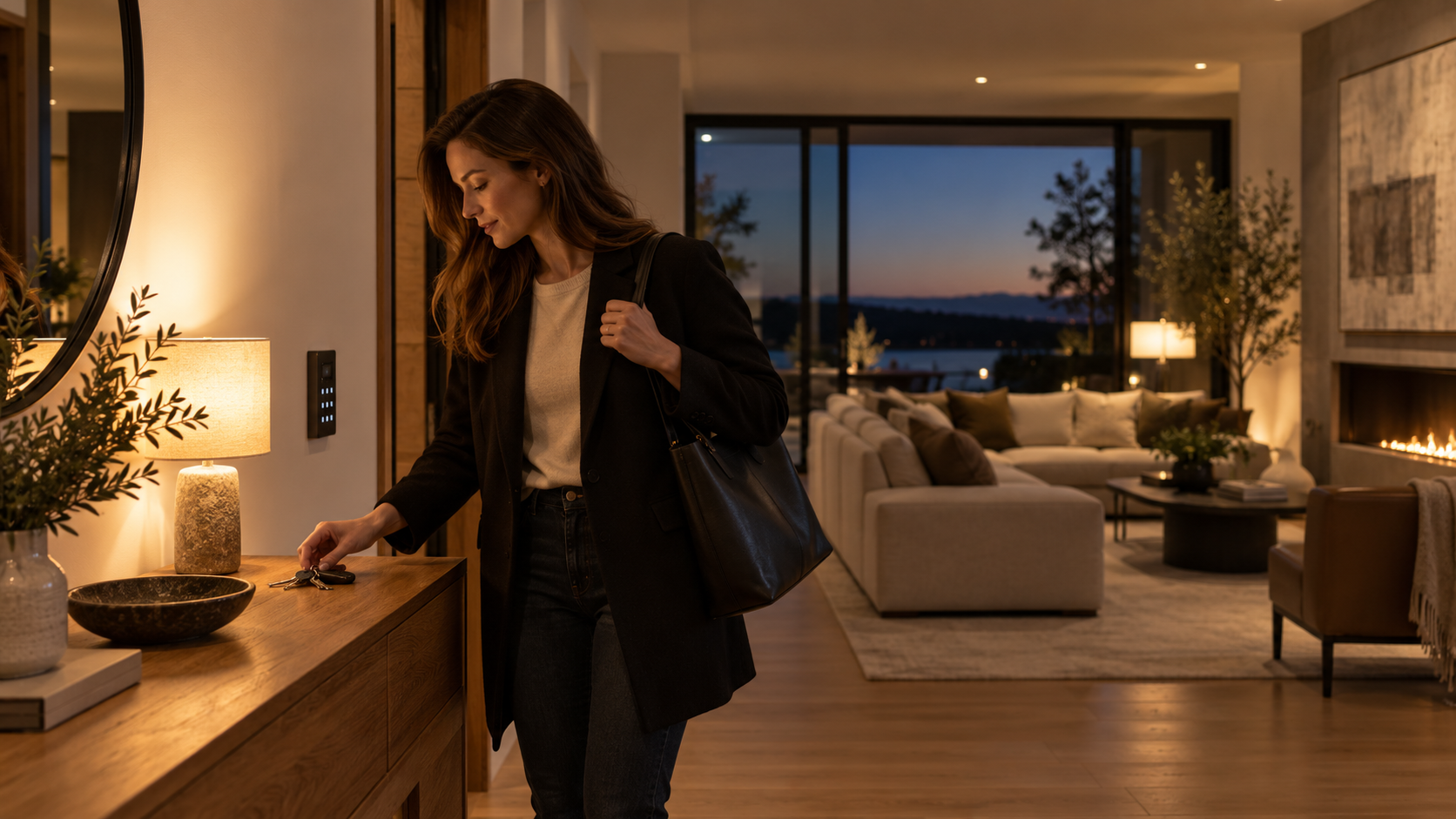
Who gets up first, and which lights should they see? Which rooms are used in the evening? What should happen when the last person leaves, and what should be waiting when the first one returns after dark? These details separate the functions worth automating from those that are easier to control directly.
Write the intention before the scene
Describe an activity without naming a product. Arriving after dark, for example, might need:
- A lit entrance and a clear path to the kitchen and living area.
- The alarm to be ready for disarming at the door.
It does not necessarily need music, every light in the house and several shades moving at once. Ask each member of the household which actions would feel welcome and which would feel intrusive. Automation that surprises people is quickly switched off.
Include everyone who uses the home
A home is not used only by the people who commissioned the system.
| User | What they need | What they should not need |
|---|---|---|
| Family members | Their usual routines, simple adjustments | A manual |
| Guests | Lights and climate in their room | An app or an account |
| Household staff | The areas they work in | Access to settings |
The basic operation of each room should be understandable to someone who has never read the system documentation.
Keep the right to change your mind
Every automatic action needs a clear rule for what happens when someone overrides it. If a person dims the living room lights after a scene has run, does that choice last until the next scheduled event, or until someone resets it? Unclear rules make a system that works correctly feel unpredictable.
Illustrative scenario. Imagine a parent who lowers the lights for a child falling asleep on the sofa, only for a timed evening scene to brighten the room ten minutes later. One agreed override rule would have kept the room as they left it.
Start small and live with it
Begin with a manageable set of routines and test them in daily use. Record each adjustment so a change to one routine does not quietly conflict with another. It is also worth agreeing early which refinements are part of the project and which later programming changes are a separate scope, so expectations are clear on both sides.
Practise the day, not the features
At handover, demonstrate ordinary actions through the controls the family will actually use: arriving, leaving and going to bed. A technical tour of every feature is no substitute for practising those moments.
Next step: Write a short description of your household’s routines, from morning to night, and bring it to BootNet as the starting point for deciding which controls and automation are worth including.